Every homeowner with an aging system faces the same hard choice. The HVAC repair vs replace decision can mean spending $400 today or $10,000 this month. Picking wrong in either direction wastes money.
A repair keeps your current system going for a lower upfront cost. A replacement costs far more now but brings new efficiency, a fresh warranty, and fewer breakdowns. The right answer depends on age, repair price, and how your system has been performing.
This guide gives you a clear cost comparison and a simple way to decide. You will see common repair prices, full replacement ranges, and the signs that tip the scale. With these numbers, you can talk to any contractor with confidence.
Prices vary by state and city, so always get 2 to 3 local quotes before you decide.
HVAC Repair vs Replace Cost at a Glance
Here is the quick view for 2026. Repairs cover a single problem. Replacement covers a whole new system.
| Option | Typical Cost in 2026 | Best When |
|---|---|---|
| Minor HVAC repair | $150 – $600 | System is under 10 years old |
| Major HVAC repair | $900 – $3,500 | One main part failed, rest is sound |
| Full HVAC replacement | $5,000 – $15,000 | System is 12-15+ years old or failing often |
| Heat pump replacement | $5,500 – $15,000 | Heating and cooling both need renewal |
| Furnace only replacement | $3,500 – $8,500 | Cooling still works well |
Minor repairs include capacitors, contactors, flame sensors, and small electrical fixes. They are fast and often done in one visit. Major repairs include blower motors, compressors, coils, and heat exchangers.
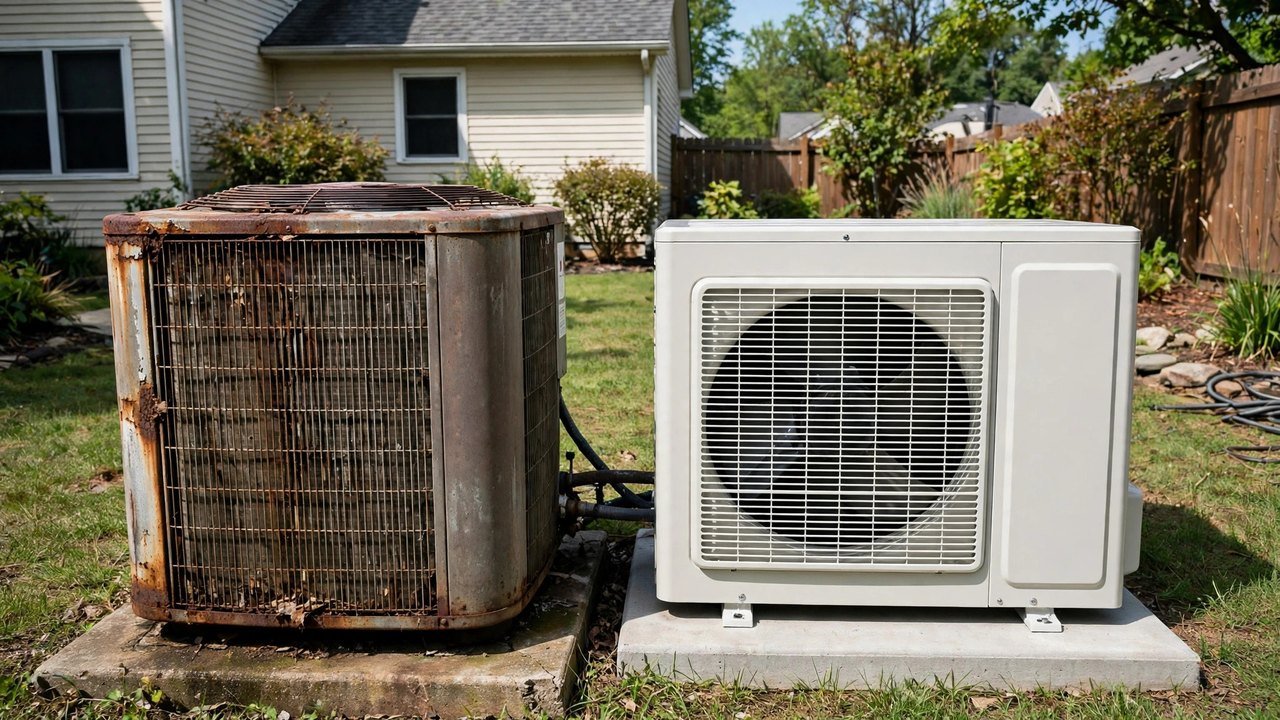
Replacement looks expensive next to a single repair. But if major repairs repeat every year, the gap closes fast. Two major repairs in 2 years can cost half as much as a new system, with no new warranty to show for it.
What Affects the HVAC Repair vs Replace Price?
Several factors decide whether repair is a bargain or a money pit. Start with age, then look at the specific failure.
Age is the top factor. Most AC units and heat pumps last 12 to 17 years. Furnaces last 15 to 20 years. A $1,200 repair on a 6-year-old system is very different from the same repair on a 16-year-old system.
Repair type matters next. A cheap part on an older system may still be worth fixing. An expensive compressor or cracked heat exchanger on an old system is often the end of the line. A cracked heat exchanger is also a safety issue and usually means replace.
Refrigerant type is a growing factor. Older AC systems that use phased-out refrigerant cost much more to recharge and repair. If your older system has a refrigerant leak, replacement often makes more sense than paying high refill costs again.
Efficiency and bills shape the decision too. Old systems use more energy for the same comfort. If your bills have climbed and rooms feel uneven, a repair will not fix that design and age problem.
Frequency tells the story too. Three service calls in 2 years is a warning sign that the system is wearing out as a whole.
HVAC Repair vs Replace Breakdown by Problem and System

Looking at common failures helps you judge a quote on the spot. Here are typical 2026 repair ranges and what they mean for your decision.
A capacitor or contactor repair often costs $150 to $450. This is almost always worth fixing unless the system has other major problems at the same time. These are wear parts, not signs the whole system is dead.
A compressor failure often costs $1,800 to $3,500 to fix. The compressor is the heart of the cooling system. Replacing it on an old unit gives you an old system with one new expensive part and a short warranty on that part only.
Full replacement, by contrast, gives you all new main parts, a 10-year parts warranty on many models if registered, and better efficiency. When a single repair is 30 to 50 percent of a new system price and the unit is old, replacement usually wins on value.
HVAC Repair vs Replace: How to Decide With a Simple Rule
If you need a fast framework, use these three checks together. They are used by many pros because they balance age, cost, and risk.
First, use the $5,000 rule. Multiply the age of your system in years by the repair cost. If the result is over $5,000, lean toward replacement. For example, a 13-year-old system times a $700 repair equals 9,100, which points to replacing. A 7-year-old system times a $500 repair equals 3,500, which points to repairing.
Second, use the 50 percent rule. If the repair costs more than 50 percent of a new system, replace. Even at 30 to 40 percent, replacement deserves a serious look if the system is past 12 years old.
Third, check the calendar and comfort. If your system is near the end of its expected life, has uneven temperatures, struggles with humidity, and needs frequent calls, a repair only delays the inevitable. Replacing on your schedule beats replacing during a heat wave or freeze when crews are booked solid.
How to Save Money on HVAC Repair vs Replace
Smart steps can lower both repair bills and replacement cost. A few habits also help you avoid the decision under pressure.
- Change filters on time and keep outdoor units clear to reduce strain and breakdowns.
- Get a second opinion on any major repair over $1,500 before you approve it.
- Ask for the failed part to be shown to you and for the repair warranty in writing.
- For replacement, get 3 quotes with the same size and efficiency for a fair compare.
- Time replacement for spring or fall to get better pricing and faster install dates.
- Claim all utility rebates and tax credits you qualify for on efficient new systems.
- Consider repairing now and replacing in the off-season if the repair is safe and fairly priced.
Do not ignore a safety issue to save money. Carbon monoxide risk, electrical damage, and major leaks need prompt action. A yearly tune-up often costs $100 to $250 and can catch small issues early.
Financing Options When You Decide to Replace
If the math points to a new system, financing can make the larger bill manageable. Home equity loans usually offer the lowest rates. Personal loans give a fixed term without using your home as collateral. HVAC financing often includes short 0 percent plans that work well if you pay the balance before the promo ends.
Compare total interest and term length, and choose the shortest term you can afford. If a repair is right now, set aside $75 to $150 a month so the next breakdown does not force a rushed choice.
Questions to Ask Before You Hire an HVAC Company
The right questions help you judge both the repair advice and the replacement quote. Ask them even if you feel sure about your choice.
How old is my system, and how much life do you think it has left? Ask the tech to base the answer on condition, not just age. Get it noted on the invoice or quote.
If I replace, will you do a load calculation? Proper sizing protects comfort and efficiency for the life of the system. Skipping it is a red flag.
What is included in your replacement price? Confirm permits, disposal, thermostat, and any duct or electrical work. Ask what could add cost once work begins.
Frequently Asked Questions
How do I decide on HVAC repair vs replace?
Use age, repair cost, and breakdown history together. If the system is over 12 to 15 years old, the repair is costly, and problems keep returning, replacement is usually best. Younger systems with a modest repair are usually worth fixing.
What is the $5,000 rule for HVAC?
Multiply system age by repair cost. If the result is over $5,000, replacement is often the better value. Weigh comfort, bills, and safety too.
What repairs are not worth doing on an old system?
A failed compressor or cracked heat exchanger on a system over 12 to 15 years old is rarely worth fixing. Costly refrigerant leak repairs on older systems also often point to replacement. Get a replacement quote before approving them.
How much does a full HVAC replacement cost in 2026?
Most homeowners pay $5,000 to $15,000 for a full system. The exact price depends on type, size, efficiency, and duct condition. Heat pumps and high-efficiency systems tend to cost more upfront.
Can I replace only the AC and keep my furnace?
Yes, if the furnace is newer and compatible with the new cooling system. A pro must confirm the match works and will be covered by warranty. Replacing both at once can save labor if both are old.
Will a new HVAC system lower my energy bills?
Usually, yes, especially if your old system is 12 years or older and low efficiency. Savings depend on climate, home insulation, and the new efficiency rating. Correct sizing and good ducts are key to real savings.
How long can I delay replacement after a major repair quote?
If the system still heats and cools safely, you may be able to delay weeks or a few months to plan and save. Do not delay if there is a safety issue or total failure in extreme weather. Ask the tech directly how urgent it is.
Conclusion
The HVAC repair vs replace choice comes down to age, cost, and trust in your current system. A modest repair on a younger unit is usually the smart, low-cost move. A major repair on an old, inefficient system that keeps breaking down is money better spent on a new system.
Run the simple math before you decide. Use the $5,000 rule, the 50 percent guide, and a 5-year view of total cost to judge your HVAC repair vs replace options fairly. Then compare a written repair quote with a full replacement quote from the same visit.
Whichever path you choose, hire a licensed company that explains the why behind its advice and puts warranties in writing. That way, your HVAC repair vs replace decision protects both your comfort and your budget for years to come.