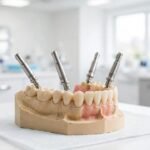
A single implant can cost $3,000 to $6,000, and a full mouth can top $50,000, so dental implant financing options matter to almost every patient. Few people pay these bills from one paycheck. Most spread the cost over months or years with a mix of savings, payment plans, and credit.
The good news is that you have several routes to choose from. The right one depends on the size of your treatment, your credit, and how fast you want to be debt-free. The wrong one can add thousands in interest to an already large bill.
This guide explains each route in plain, general terms, and which questions protect you before you sign.
This is general cost information only, not medical or financial advice. Please discuss treatment suitability with your dentist, and consider independent financial advice for large borrowing decisions.
Dental Implant Financing Options at a Glance
| Financing Option | Best For | Key Point to Check |
|---|---|---|
| In-house payment plan | Staged treatment | Payment schedule and total |
| Third-party medical financing | Large fixed or full mouth work | Full repayment terms |
| HSA / FSA funds | Patients with these accounts | Eligibility and deadlines |
| Personal loan | Predictable fixed payments | Total amount repaid |
| Credit card | Small balances paid fast | Interest if balance lingers |
| Savings / phased treatment | Avoiding interest | Timeline your dentist approves |
Treatment size drives the choice. A single implant at $3,000 to $6,000 might fit savings plus a short plan. All-on-4 at $15,000 to $38,000 per arch usually needs structured financing, and full mouth work at $30,000 to $70,000 or more often blends two or three methods. Prices vary by state and city, and readers should get 2–3 quotes from local providers before financing anything.
What Affects the Price You Need to Finance?
Number of implants and teeth. More implants and more arches mean a larger bill. One tooth, one arch, and two arches are entirely different financing conversations.
Components included. A complete single implant includes the post at $1,000 to $3,000, the abutment at $300 to $1,000, and the crown at $800 to $3,000. Confirm your quote includes all three, plus imaging and follow-ups.
Prep work. Extractions run about $75 to $650 per tooth, and bone grafts range from about $200 to $3,500. Prep work can add a meaningful amount before the implant itself is placed.
Timeline and insurance. Implant care happens in stages over months, which can help you pay in parts instead of one lump sum. If your plan pays part of the cost, it is often capped by an annual maximum, but even a modest payment reduces what you finance. Ask for one final, itemized total before applying for any financing.
Dental Implant Financing Options: Cost Breakdown by Stage
| Treatment Stage | Typical Cost | When It Happens |
|---|---|---|
| Exam and 3D imaging | $100–$750 | Start of treatment |
| Extraction (if needed) | $75–$650 | Early stage |
| Bone graft (if needed) | $200–$3,500 | Early stage |
| Implant post placement | $1,000–$3,000 | Surgery stage |
| Abutment | $300–$1,000 | After healing |
| Final crown | $800–$3,000 | Final stage |
For a full arch, the pattern is similar but larger. Surgery and temporary teeth come first, and the final bridge — often $6,000 to $20,000 — comes months later. This spacing opens smart strategies: pay surgery from savings, then finance only the final bridge, or split stages across two calendar years to use benefits twice. Ask how your office bills each stage.
Dental Implant Financing Options Compared Side by Side

In-house payment plans. The dental office itself lets you pay over time, often aligned with treatment stages. The process is simple and stays in one place. The limits, schedule, and any fees are set by the office, so get them in writing.
Third-party medical financing. Specialized health care financing companies pay the office, and you repay them monthly. This can cover large treatments in one approval. Terms vary a great deal between plans and applicants, so read the full agreement, including deferred-interest or late-payment conditions where they apply.
HSA and FSA funds. These accounts use pre-tax money many workers already set aside for health costs. Implant care may be an eligible expense. HSAs roll over year to year, while FSAs often have use-by deadlines, so timing matters.
Personal loans. Banks, credit unions, and online lenders offer fixed amounts repaid in fixed installments. Predictability is the main strength. Compare the total repaid over the full term across lenders, since a longer term lowers the payment but raises the total.
Credit cards. Cards are fast and flexible, and some people use an introductory offer for part of the bill. The risk is carrying a large balance at a standard interest rate, which can grow the cost sharply. This route suits small amounts repaid quickly.
Savings and phasing. Paying cash avoids interest entirely, and phasing treatment lets savings do the work credit would otherwise do.
How to Save Money While Using Dental Implant Financing Options

- Compare 2–3 itemized quotes first. Financing a fair price matters more than clever payment terms on an inflated one.
- Ask about dental school clinics. Lower treatment fees under supervision mean a smaller amount to finance, even if care takes longer.
- Time stages around your insurance annual maximum. Splitting treatment across two plan years can apply two maximums and reduce your out-of-pocket share.
- Ask about an in-house savings or membership plan. Member pricing on exams, imaging, or stages can cut the total before financing begins.
- Use HSA or FSA funds first. Spending account money you already have reduces the amount that needs interest-bearing credit.
- Choose the shortest term you can afford. Shorter repayment usually means less total interest, even if the monthly payment is higher.
Read every agreement fully before signing. If a term is unclear, ask for it in plain writing.
Financing Options in Detail: How Payment Timing Usually Works

It helps to picture a real payment flow. At consultation, you pay for the exam and imaging, or those fees are folded into the plan. At surgery, the largest early payment usually falls due, and third-party financing typically funds the agreed amount around this point.
During healing, which can last several months, there may be no major charges beyond checkups. This quiet period is a good window to rebuild savings before the final stage, when the abutment and crown or bridge are fitted and the remaining balance is settled.
For full mouth treatment, ask whether the office will finance each arch separately. Paying for one arch at a time can make a $50,000-plus plan far more manageable. And do not let an expiring financing offer rush you into treatment you have not fully compared.
Questions to Ask Your Dentist and Lender Before You Sign
These questions protect you on both the dental and the money side of the decision.
First, ask for the exact all-in total in writing, including post, abutment, crown, imaging, prep work, and follow-ups. Financing should be based on the complete figure.
Second, ask how payments are scheduled — at surgery, at the final fitting, and if healing takes longer than expected.
Third, ask which financing routes the office works with, and ask each lender for its full terms in writing, including the total you will repay. Also ask what happens if treatment changes mid-way, and whether you can repay early without a penalty.
Finally, ask yourself one honest question. Does the monthly payment still fit your budget if other expenses rise? Choose a plan that stays comfortable, not one that only works on a perfect month.
Frequently Asked Questions
Can I finance a single dental implant?
Yes. Even a single implant at $3,000 to $6,000 is commonly paid in stages or with a short payment plan. Many offices split the fee between the surgery visit and the final crown visit.
Does dental insurance reduce what I need to finance?
It can, if your plan covers implants. Many plans cap payments with an annual maximum, so the help is real but limited. Get a written pre-treatment estimate so you finance only your true share.
Can I use HSA or FSA money for implants?
In many cases, yes. Implant treatment is often an eligible expense under health savings and flexible spending accounts. Rules vary by plan, so confirm eligibility with your account provider before treatment.
Is in-house financing better than a personal loan?
Neither is always better. In-house plans are simple and tied to treatment stages, while personal loans offer fixed terms from your own bank or credit union. Compare the total cost and schedule of each offer in writing.
What credit do I need for medical financing?
Requirements vary by company and plan. Some options exist for a wide range of credit profiles, while the best terms usually go to stronger credit. Checking your own credit report before applying helps you set expectations.
Can I finance full mouth implants?
Yes, and most full mouth patients do finance at least part of the $30,000 to $70,000 or more total. Many blend savings, account funds, and a payment plan, and some treat one arch at a time.
What happens if my treatment cost changes after I finance?
Ask about this before signing. Some arrangements adjust the amount, while others require a new agreement for added work. A clear written policy from the office and lender prevents confusion later.
Conclusion
Dental implant financing options turn a large one-time bill into a planned series of payments. In-house plans, third-party medical financing, HSA and FSA funds, personal loans, and smart phasing each fit different budgets and treatment sizes.
The safest order of operations is simple. First, pin down the real all-in cost with 2–3 itemized local quotes. Then use any insurance, savings, and account funds to shrink the amount you borrow. Only then compare dental implant financing options on total repayment, not just the monthly figure.
Handled this way, financing becomes a tool instead of a trap. You get the fixed, comfortable teeth you need, on a schedule your budget can carry, with no surprises hiding in the fine print.