A worn or damaged garage door hurts curb appeal, security, and daily convenience. If your door is noisy, sagging, or hard to open, garage door replacement cost is worth understanding before it fails completely.
For most homes, a new door is a mid-sized project, not a huge remodel. Prices still vary a lot by size, material, and insulation. A basic single door costs far less than a custom double door with windows.
This guide covers average 2026 prices, the factors behind them, and how a new opener fits into the budget. Prices vary by state and city, so always get 2-3 local quotes before you decide.
A good replacement should last 20-30 years with basic care. Choosing well now pays off every day you use it.
Garage Door Replacement Cost: Quick Cost Summary

Most homeowners pay $800 to $2,500 for a standard replacement installed. Large or custom doors cost more. Here is the quick picture.
| Door Type / Item | Average Cost | Low-High Range |
|---|---|---|
| Single door (8×7 or 9×7), installed | $1,100 | $800 – $1,800 |
| Double door (16×7), installed | $1,800 | $1,200 – $3,000 |
| Insulated double door | $2,400 | $1,600 – $3,800 |
| Custom / carriage-style door | $3,500 | $2,500 – $4,500+ |
| New opener, installed | $450 | $300 – $700 |
| Old door removal and disposal | $150 | $100 – $300 |
| Window inserts / decorative hardware | $250 | $100 – $600 |
These prices usually include the door, tracks, springs, basic labor, and haul-away. High-end materials like real wood push totals well above these ranges.
If your opener still works well, you may not need a new one. Many quotes list the opener separately, so check what is included.
What Affects the Garage Door Replacement Cost?
Size is the first factor. A double door uses more material and larger springs and takes longer to install. Oversized or RV-height doors cost more still.
Material drives both price and upkeep. Steel is the most popular and affordable choice. Wood looks classic but costs more and needs regular finishing. Aluminum and fiberglass sit in the middle.
Insulation adds cost but adds comfort. An insulated door helps if your garage is attached, has a room above it, or doubles as a workshop. Insulation is rated by R-value; higher is warmer and often quieter.
Style and details matter. Windows, panel designs, carriage-style hardware, and custom colors all raise the price. Plain doors are the best value.
Labor and site conditions count too. Replacing bent tracks, fixing a damaged frame, or adding new weather seals adds work. If the opening is not square or standard-sized, custom fitting adds cost.
Your region affects labor rates. Large cities tend to cost more than rural areas for the same door.
Garage Door Replacement Cost by Material and Component
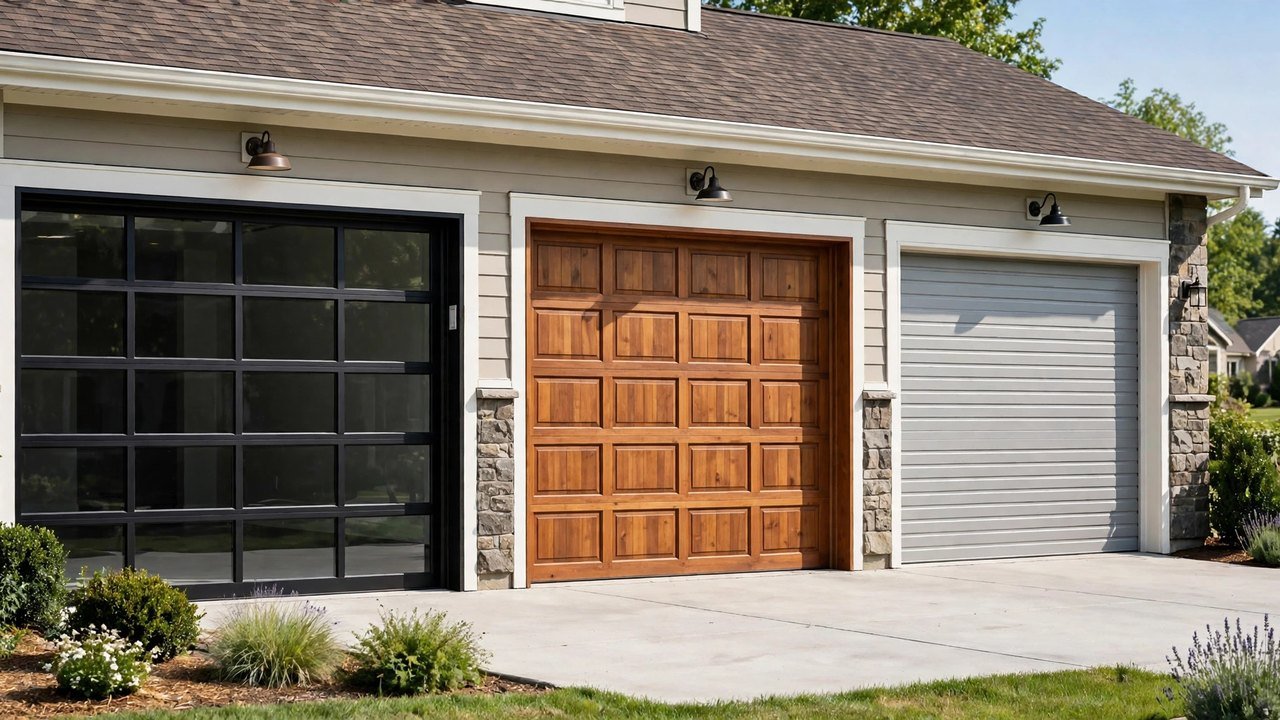
Steel doors cost about $600 to $2,000 for the door alone in common sizes. They are strong, low-maintenance, and available in many colors. Thicker steel with insulation costs more but dents less.
Wood doors cost about $1,200 to $4,000 or more for the door alone. They offer real warmth and character. They also need painting or staining every few years, which adds long-term cost.
Aluminum doors cost about $800 to $2,500. They resist rust and suit modern homes. They are lighter, which can be easier on openers, but they dent more easily than steel.
Fiberglass doors cost about $1,000 to $2,500. They can mimic wood grain without the same upkeep. Quality varies, so check the warranty and thickness.
The hardware package matters for safety and life. New springs, cables, rollers, and tracks often add $200 to $500 in parts when not included. Springs are wear items and should almost always be replaced with a new door.
An opener adds $300 to $700 installed. Belt-drive openers are quieter than chain-drive models. Smart openers with battery backup and phone control cost a bit more.
Garage Door Replacement Cost: Repair vs. Replace Compared

Not every bad door needs full replacement. A single damaged panel, a broken spring, or a failed opener can often be repaired for $150 to $600.
Repair makes sense when the door is under 10-15 years old, the damage is limited, and the rest of the system is sound. It is the cheaper choice in the short term.
Replacement makes sense when panels are rusted, cracked, or warped in several places. It also makes sense when the door lacks insulation or safety features, or when repair quotes approach half the cost of a new door.
A new door also brings better security, smoother operation, and improved curb appeal. For many sellers, it is one of the more visible upgrades a buyer notices from the street.
Use a simple rule: if the door structure is sound, repair it. If the door itself is failing, put the money toward replacement instead of repeated fixes.
How to Save Money on Garage Door Replacement Cost
A few practical choices can trim your total without hurting quality.
- Get 2-3 quotes and confirm each includes springs, tracks, seals, and disposal.
- Choose steel in a standard size and color for the best value.
- Add insulation only where it helps, such as an attached garage or a room above.
- Keep your current opener if it is reliable and compatible with the new door.
- Skip windows and decorative hardware if your budget is tight; they add cost fast.
- Ask about in-stock doors. Custom orders cost more and take longer.
- Replace the door before it fails fully, so you can shop calmly instead of paying emergency rates.
- Ask about package pricing when you buy the door and opener together.
Never try to save money by reusing worn springs or skipping safety cables. Those parts protect you and the door.
Financing Options for Garage Door Replacement
Most replacements are small enough for savings or a credit card paid off quickly. Still, premium doors with an opener can reach several thousand dollars.
Many dealers offer short-term financing or payment plans, sometimes through home improvement lenders. Ask about interest and fees before you agree, since promotional offers often have deadlines.
A home improvement credit card or a small personal loan can also work for larger custom jobs. Compare the total interest cost, not just the monthly payment.
If you are replacing the door as part of a larger exterior remodel, the cost may fit into a home equity line of credit. For a single door, that is usually more process than the job needs.
Some energy programs and utility rebates occasionally support insulated doors for attached garages. Availability is local and changes often, so check your utility and state energy office before you buy.
Questions to Ask Before You Hire
Garage doors are heavy and spring tension is dangerous. Good questions help you hire a safe, skilled installer.
Are you licensed and insured, and will trained employees do the work? How long have you installed doors in this area?
Does the quote include new springs, tracks, rollers, weather seals, and removal of the old door? Is the opener included or separate?
What warranty covers the door, the finish, the springs, and the labor? How long does each part last?
How long will installation take, and will you test safety features like auto-reverse before you leave? Will you show me basic maintenance?
Get the door model, insulation value, warranty, and total price in writing. Keep the paperwork for future service and home sale records.
Frequently Asked Questions
How much does garage door replacement cost on average in 2026?
Most homeowners pay $800 to $2,500 installed for a standard door. Double, insulated, or custom doors often cost $1,800 to $4,500 or more with an opener.
How long does it take to replace a garage door?
A standard replacement usually takes 3-6 hours. Custom doors, frame repairs, or opener work can extend the job to a full day.
Should I replace the opener with a new door?
Not always. If your opener is under 10 years old, works well, and has modern safety features, keep it. Replace it if it is noisy, weak, or lacks auto-reverse.
Which garage door material is best?
Steel is the best value for most homes. It is durable, affordable, and low-maintenance. Wood suits classic styles, while aluminum fits modern homes in rust-prone areas.
Is an insulated garage door worth the extra cost?
Yes, for attached garages, garages under living space, or workshop use. It improves comfort and cuts noise. For a detached, unheated garage, the benefit is smaller.
Can I replace a garage door myself?
It is risky. Springs hold high tension and can cause serious injury. Most homeowners should hire a pro, even if they handle other home projects themselves.
How long does a new garage door last?
A quality door typically lasts 20-30 years. Springs last about 7-10 years with normal use. Basic cleaning and lubrication help the system reach its full life.
Conclusion
Garage door replacement cost in 2026 depends on size, material, insulation, and whether you add an opener. Most standard jobs fall between $800 and $2,500, with custom double doors reaching $4,500 or more. A clear, itemized quote makes these choices easy to compare.
Think beyond the first price. A well-insulated steel door with new springs and a reliable opener will serve quietly for decades, while repeated repairs on a failing door waste money. Match the door to your home, climate, and budget.
Get 2-3 local quotes, confirm the warranty in writing, and hire an insured installer. With the right choice, your garage door replacement cost buys safety, comfort, and curb appeal for years to come.