If you have seen advertisements for low flat-rate teeth, you have probably met the all-on-4 dental implants cost question. In 2026, All-on-4 typically costs between $15,000 and $38,000 per arch in the United States. Both arches together usually run $30,000 to $70,000 or more.
The spread within that range is wide, and material choice explains much of it. Acrylic teeth sit near the lower end. Solid zirconia sits near the higher end.
This guide breaks down per-arch prices, what is usually included, and how to compare quotes fairly.
This is general cost information only, not medical advice. Please discuss treatment suitability with your dentist, since All-on-4 depends on your bone shape, bite, and general health.
All-on-4 Dental Implants Cost at a Glance

These are typical 2026 price bands for one arch: upper or lower.
| Material | Typical Cost Per Arch | Notes |
|---|---|---|
| Acrylic on a metal bar | $15,000–$25,000 | Lower cost, easier repairs |
| Porcelain-fused options | $22,000–$32,000 | Mid-range finish |
| Solid zirconia | $28,000–$38,000 | Strongest, most stain-resistant |
| Both arches, acrylic | $30,000–$50,000 | Full mouth lower band |
| Both arches, zirconia | $55,000–$75,000+ | Full mouth upper band |
Quotes below these bands do exist, but they often exclude items like temporaries, extractions, or imaging. A quote above the bands may reflect a specialist team, premium labs, or both. Always compare what is inside the number, not just the number itself.
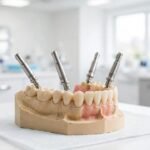
For context, a single tooth implant with its crown usually costs $3,000 to $6,000, and full mouth fixed treatment on more implants runs higher. Replacing one full arch tooth by tooth could mean a dozen or more implants. All-on-4 uses only four posts to hold the entire arch, which is why it often costs less than people first expect.
Prices vary by state and city, and readers should get 2–3 quotes from local providers before choosing.
What Affects the All-on-4 Dental Implants Cost?

Material, first and foremost. Acrylic teeth on a titanium bar are lighter and cheaper. Zirconia is milled from a solid block, feels more like natural teeth, and resists stains better. The lab work for zirconia is slower and more costly.
Number of implants and bone condition. Standard All-on-4 uses four posts, with the back two angled for support. If bone is weak, some patients need extra implants, grafts, or a different plan entirely. Angled placement avoids major grafting in many cases, but not in every mouth.
Extractions and sedation. Removing failing teeth, treating infection, and the type of sedation you choose all add fees. Longer surgery under deeper sedation costs more than a short case with light sedation.
Team and location. Some offices use one general dentist for every step. Others use a surgeon, a restorative dentist, and an in-house lab. Team-based care often costs more — and can be worth it for complex cases. City rents and lab prices also lift fees in major metros.
All-on-4 Dental Implants Cost Breakdown by Stage
| Component | Typical Range |
|---|---|
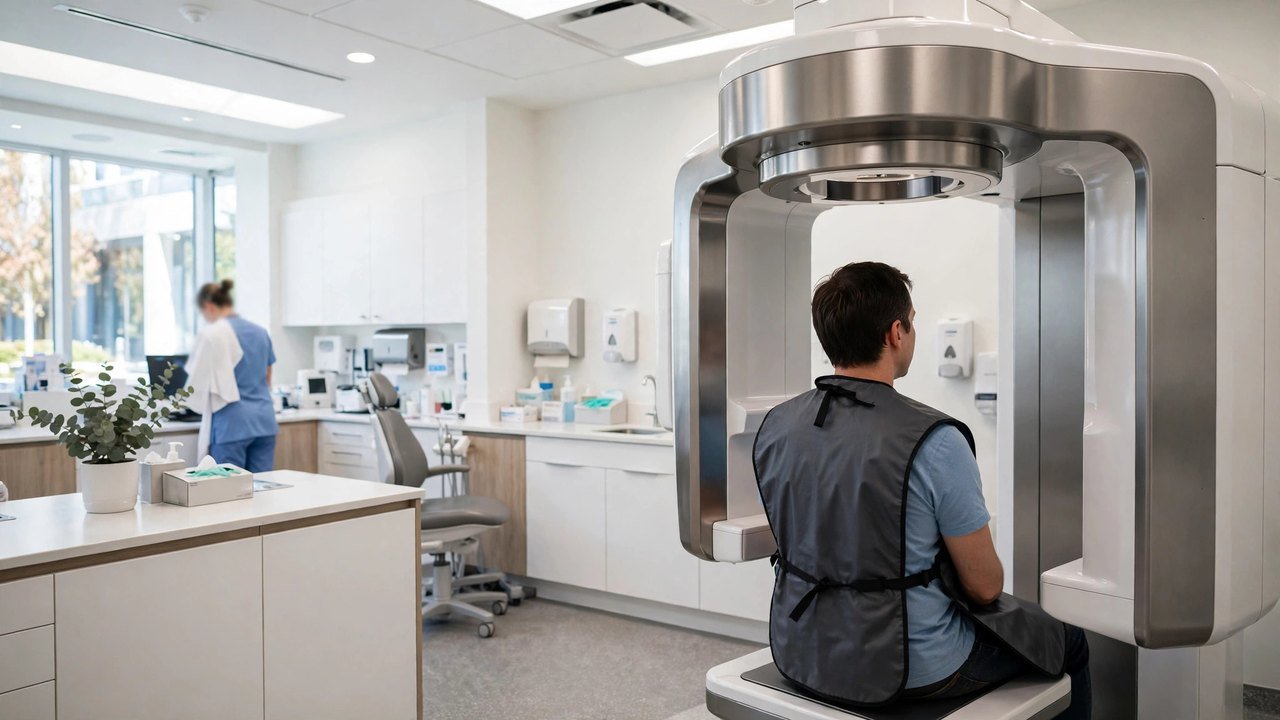
| Consultation, exam, and 3D scans | $200–$1,000 |
| Four implant posts | $4,000–$10,000 |
| Abutments and connectors | $1,200–$3,500 |
| Extractions (if needed) | $75–$650 each |
| Temporary teeth set | $500–$2,500 |
| Final prosthetic teeth | $6,000–$20,000 |
| Bone grafting (if needed) | $200–$3,500+ |
The final teeth are the single biggest line in most quotes. That is the custom-made piece you see in the mirror, and its price depends on material and lab quality. Connectors are smaller but not trivial: they are precision parts that keep the arch stable under bite pressure.
Ask each office to itemize these stages in writing. When two quotes break down the same way, differences stand out — one may include the temporaries and scans, the other may bill them later as add-ons.
All-on-4 Dental Implants Cost: What Is Usually Included?
Many full-arch quotes bundle the consult, scans, surgery, four implants, connectors, a temporary set, the final teeth, and routine follow-ups. That bundled style is helpful because surprise bills are then less likely.
What is often not included: large bone grafts, treatment of unrelated dental problems, deep sedation upgrades, replacement teeth after accidental damage, and long-term maintenance visits beyond the first year. None of these are unusual, but each can add to the total. Get the inclusions list in writing, and ask what each likely add-on would cost if you need it. A clear quote protects both you and the office.
| Option | Typical Cost Per Arch | How It Feels |
|---|---|---|
| All-on-4 acrylic | $15,000–$25,000 | Fixed, light, easy repairs |
| All-on-4 zirconia | $28,000–$38,000 | Fixed, strongest finish |
| All-on-6 fixed | $20,000–$42,000 | Fixed, extra support |
| Implant denture | $8,000–$20,000 | Removable, snaps in |
| Conventional denture | $1,000–$4,000 | Removable, least stable |
How to Save Money on the All-on-4 Dental Implants Cost
- Get 2–3 itemized quotes. Pick offices that treat full arches regularly, and compare the same material in each quote.
- Ask a dental school. Graduate prosthodontic and surgical programs sometimes accept full-arch cases at reduced fees under close supervision.
- Split care across plan years. If you have dental insurance, stage treatment so parts fall into two benefit years and use two annual maximums.
- Ask about an in-house plan. Membership or savings plans at implant centers can reduce fees on surgery and restorations.
- Choose acrylic if budget is tight. It costs less upfront and repairs are simpler, though it may need refreshing sooner than zirconia.
- Do one arch first. Treat the arch that bothers you most, then complete the second when finances allow, if your dentist confirms waiting is safe.
Avoid traveling far solely for a low headline price. Follow-up visits are frequent in the first year, and long travel adds cost and stress.
Financing Options for All-on-4 Treatment
In-house staged payments. Many implant practices split the fee across key steps: booking, surgery day, and delivery of finals. This spreads the cost without a separate loan.
Third-party medical financing. Health care financing companies offer monthly plans for large cases. Terms, approval, and any promotional periods vary, so read the details carefully before you sign.
HSA and FSA funds. All-on-4 care may qualify as an eligible expense. Check with your plan administrator, keep itemized receipts, and watch FSA spending deadlines.
Personal loans or credit unions. A fixed-rate loan can be simpler than revolving credit. Compare total repayment across the full term, not just the monthly amount.
Questions to Ask Your Dentist About All-on-4 Dental Implants Cost
First, ask exactly which material the quote covers and what the other material would cost. Ask who makes the final teeth — an in-house lab or an outside lab — since lab quality shapes both price and appearance.
Second, ask what happens if one implant fails to fuse with the bone. Is a replacement surgery included in the fee, and what would you pay if it is not covered?
Third, ask how many follow-up visits are included and for how long, what maintenance the teeth need each year, and what the office charges for that upkeep after the included period ends.
Finally, ask about repairs: if a tooth chips in year three, what does a typical repair cost, and how long would you be without your teeth while it is fixed?
Frequently Asked Questions
How much does All-on-4 cost per arch in 2026?
Most patients pay $15,000 to $38,000 for one arch in the United States. Acrylic options fall in the lower half of the range, and solid zirconia options fall in the upper half.
Is All-on-4 cheaper than individual implants?
Yes, usually. A full arch of individual implants could mean 10 or more implants with crowns, which often exceeds $50,000 per arch. All-on-4 holds the whole arch on four implants instead.
What is not included in most All-on-4 quotes?
Common extras include larger bone grafts, deep sedation, treatment of other dental problems, and repairs after accidental damage. Ask for the inclusions list in writing before you commit.
How long does All-on-4 treatment take?
Surgery is often done in one visit, with temporary teeth fitted soon after. Final teeth usually follow after a healing period of several months, once the implants have fused with the bone.
Zirconia or acrylic: which should I choose?
Zirconia is stronger and more stain-resistant but costs more to make and repair. Acrylic costs less and repairs more easily. Your bite force, habits, and budget all factor into the right choice.
Does insurance cover All-on-4 implants?
Coverage is usually limited and often capped at an annual maximum that is small compared with the total fee. Some plans contribute toward extractions or the prosthetic. Confirm details with your insurer in writing.
Can All-on-4 be done on just the lower arch?
Yes. Many patients treat one arch only, especially the lower arch where dentures tend to feel least stable. Your dentist can plan the bite so a treated arch works well with the teeth opposite it.
Conclusion
The all-on-4 dental implants cost in 2026 lands between $15,000 and $38,000 per arch for most patients, driven mainly by material and by what the quote includes. Doubling it for both arches gives a realistic full mouth planning range.
Comparing quotes line by line is the single best way to avoid surprises. When you line up materials, inclusions, and repair policies from 2–3 trusted offices, the right choice usually becomes clear, even when headline prices look similar at first glance.
Treat the decision as both a health choice and a financial one. Ask clear questions, pace the payments in a way that fits your life, and choose the team you trust. With that approach, the all-on-4 dental implants cost becomes a planned investment rather than a stressful surprise.