If you are missing a tooth, the dental implants cost is probably the first thing you want to know. In 2026, a single implant with its crown usually costs between $3,000 and $6,000 in the United States. That is a wide range, and your own quote can fall below or above it.
The total depends on more than the implant itself. You also pay for the connector piece, the crown, imaging, and any prep work your mouth needs first. A simple case in a healthy jaw costs far less than a case that needs a bone graft or an extraction.
This guide breaks the price down piece by piece, and shows how to save and finance it.
This is general cost information only, not medical advice. Please discuss treatment suitability with your dentist before you decide on any procedure.
Dental Implants Cost at a Glance in 2026
These are typical all-in 2026 ranges. They include the post, abutment, and crown unless noted.
| Treatment | Average Cost | Low–High Range |
|---|---|---|
| Single tooth implant (all-in) | $4,500 | $3,000–$6,000 |
| Two implants with crowns | $9,000 | $6,000–$12,000 |
| Implant-supported bridge (3 teeth) | $8,500 | $6,000–$13,000 |
| Four implants, one arch support | $16,000 | $12,000–$24,000 |
| All-on-4, per arch | $24,000 | $15,000–$38,000 |
| Full mouth, both arches | $50,000 | $30,000–$70,000+ |
| Conventional denture, per arch (for comparison) | $2,000 | $1,000–$4,000 |
A single tooth is the most common starting point. The price per tooth often drops a little when you place several implants in one visit, because imaging, planning, and some visit costs are shared.
Prices vary by state and city, and readers should get 2–3 quotes from local providers before choosing. A quote in a large coastal city will often be higher than one in a smaller Midwestern town.
What Affects Dental Implants Cost the Most?

Number of teeth. This is the biggest factor. One implant is one surgery and one crown. Four implants mean four posts, four connectors, and either crowns or a shared bridge or denture piece.
Materials. Crowns can be made from different materials. Zirconia and high-grade porcelain usually cost more than basic options. They also tend to look more natural and resist wear well.
Bone and gum health. If your jawbone is thin or soft, you may need a graft first. That adds cost and healing time. Healthy bone usually means a shorter, cheaper path.
Location and provider. Rent, staff costs, and lab fees differ by area. An experienced specialist in a major city often charges more than a general dentist in a rural area. Most cases also use 3D scans to plan the exact angle and depth, which is a separate line on many bills.
Dental Implants Cost Breakdown by Component
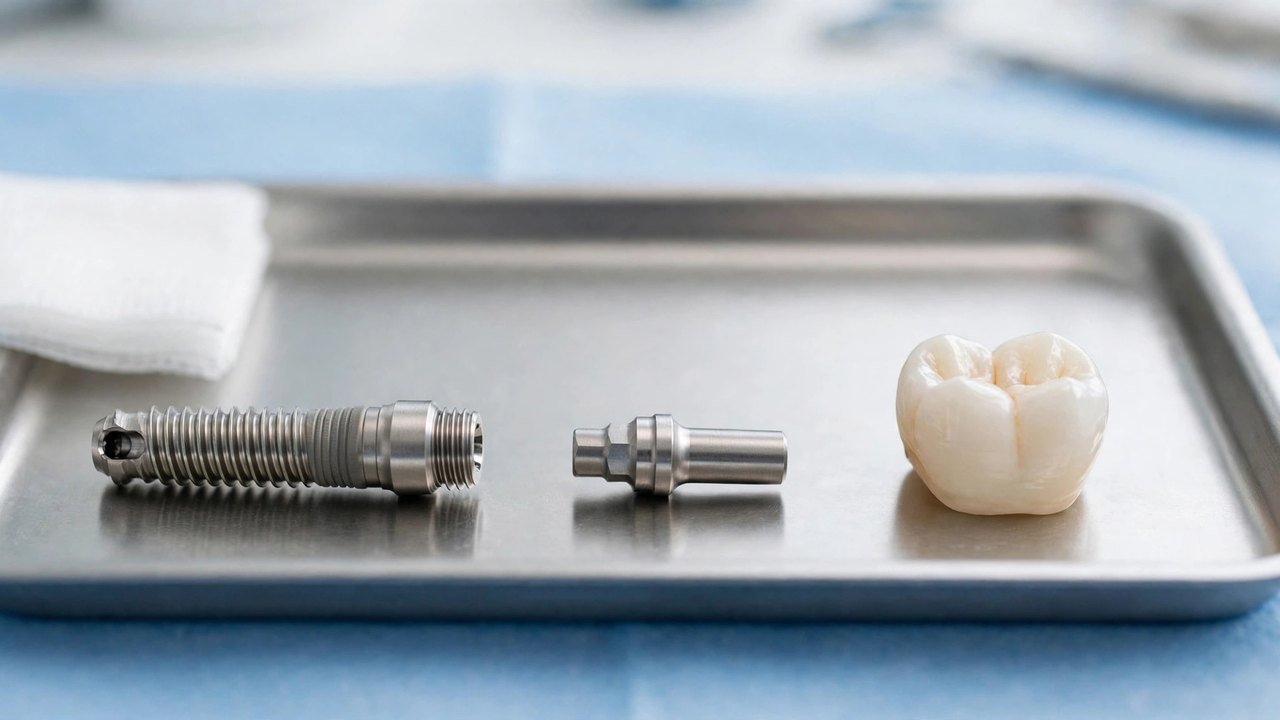
A single implant is not one item. It is a small system of parts and services. Here is how the parts usually price out in 2026.
| Component | Typical Range |
|---|---|
| Implant post (titanium screw) | $1,000–$3,000 |
| Abutment (connector piece) | $300–$1,000 |
| Crown (visible tooth) | $800–$3,000 |
| Bone graft | $200–$3,500 |
| Tooth extraction | $75–$650 |
| 3D imaging and planning | $100–$750 |
| Initial exam and consultation | $50–$300 |
The implant post is the metal root placed in the jaw. The abutment sits on top and connects the post to the crown, the part you see and chew with. Some quotes bundle these parts, and others list each on its own.
Ask for an itemized quote. When each part has its own line, you can compare two offices fairly instead of guessing what is included.
Dental Implants Cost vs. Dentures and Bridges
Implants are the premium option, but they are not the only option. It helps to compare the upfront price and the long-term picture side by side.
| Option | Typical Cost | How Long It Often Lasts |
|---|---|---|
| Single implant with crown | $3,000–$6,000 per tooth | Many years with good care |
| Fixed bridge (3 teeth) | $2,000–$5,000 | Often 10–15 years |
| Conventional denture, per arch | $1,000–$4,000 | Often 5–8 years before remake |
| Implant-supported denture, per arch | $8,000–$20,000 | Denture remade over time, posts remain |
A bridge costs less upfront, but it relies on the teeth next to the gap, which are shaped down to hold it. Dentures cost the least, but can feel less stable, especially in the lower jaw. Implants cost more at the start, yet stand on their own, help preserve jawbone, and stay in at night. Over time, fewer remakes can narrow the gap.
How to Save Money on Dental Implants Cost
- Get 2–3 written quotes. Ask each office for the same itemized list so you can compare like for like.
- Try a dental school clinic. Supervised students and residents often provide care at lower fees. Treatment may take more visits.
- Time care around your insurance annual maximum. If you have dental insurance, splitting stages across two plan years can use two annual maximums instead of one.
- Ask about an in-house membership or savings plan. Some offices offer a yearly plan with reduced fees for members. Read the terms before you join.
- Phase the treatment. Replace the most important teeth first and add the rest later, if your dentist says phasing is safe.
- Ask what is included. A higher quote that includes imaging, follow-ups, and the crown can beat a low quote full of add-ons.
Avoid choosing only on price. Very low offers may exclude key parts or leave follow-up care unclear.
Financing Options for Dental Implants Cost
In-house payment plans. Some offices let you pay in stages that match treatment — part at surgery, part at the crown. Terms vary, so ask in writing.
Third-party medical financing. Independent financing companies that focus on health care let you pay monthly over a set period. Approval, limits, and terms depend on your credit and the plan you choose. Read the full agreement, including what happens if a payment is late.
HSA and FSA funds. If you have a health savings account or flexible spending account, implant care may be an eligible expense. Check your plan rules, and remember that FSA funds often must be used within the plan year.
Personal loans and cards. A bank, credit union, or online lender may offer a fixed-rate loan for dental work. Compare the total cost of borrowing, not just the monthly payment. A credit card can work for a small balance paid off quickly, but interest on a large balance adds a lot.
Questions to Ask Your Dentist About Dental Implants Cost

First, ask for the full all-in price in writing. Does it include the post, abutment, crown, imaging, and all follow-up visits? If not, what else will you be charged for?
Second, ask if you need any prep work. Do you need an extraction, a graft, or treatment for gum disease first? Each item should have its own price and timeline.
Third, ask about materials and the timeline. How many visits will this take, how much healing time sits between stages, and when is each part due? A longer plan can help you budget stage by stage.
Finally, ask what happens if something fails or needs repair. Is any part of the work covered by the office for a set period? Get the answer in writing.
Frequently Asked Questions
How much does one dental implant cost in 2026?
A single implant with its abutment and crown usually costs $3,000 to $6,000 in the United States. The exact price depends on your city, the materials used, and whether you need extra prep work like a graft.
Why do quotes for the same tooth vary so much?
Offices include different items in their quotes. One price may cover imaging, the crown, and follow-ups, while another covers only the surgery. Always compare itemized quotes to see what is really included.
Does dental insurance cover implants?
Some plans cover part of implant care, and others do not cover it at all. Many plans have an annual maximum that limits total payouts in a year. Check your own plan documents or call your insurer before treatment starts.
How long do dental implants last?
Implant posts can last many years, and often decades, with good home care and regular dental visits. Crowns on top can wear or chip over time and may need repair or replacement sooner than the post itself.
Is a bone graft always needed?
No. Many patients have enough healthy bone for an implant without a graft. If bone has shrunk after a tooth was lost, a graft may be needed to hold the post securely. Your 3D scan will show this clearly.
Can I get implants if I have gum disease?
Active gum disease usually needs treatment first. Placing an implant in an unhealthy mouth raises the risk of problems. Your dentist will often stabilize your gums, then reassess you for implant treatment.
Are cheaper implants abroad a good way to save?
Travel can lower the upfront price, but follow-up care and fixes happen back home. Travel costs, time off, and repair costs if something goes wrong can shrink the savings. Weigh the full picture, not just the first quote.
Conclusion
The dental implants cost in 2026 is best understood as a range, not a single number. One tooth usually runs $3,000 to $6,000 all-in, while full mouth work can reach $30,000 to $70,000 or more. The parts, materials, prep work, and your location explain most of that gap.
Compare your options with clear eyes. Dentures and bridges cost less upfront, while implants offer stability and bone support that can pay off over many years. Itemized quotes from 2–3 local providers will show you what is fair in your area.
Most of all, treat the dental implants cost as a plan, not a shock. Phase the work if your dentist agrees, use savings or financing wisely, and ask direct questions before you start. A clear plan makes a large treatment far easier to handle.