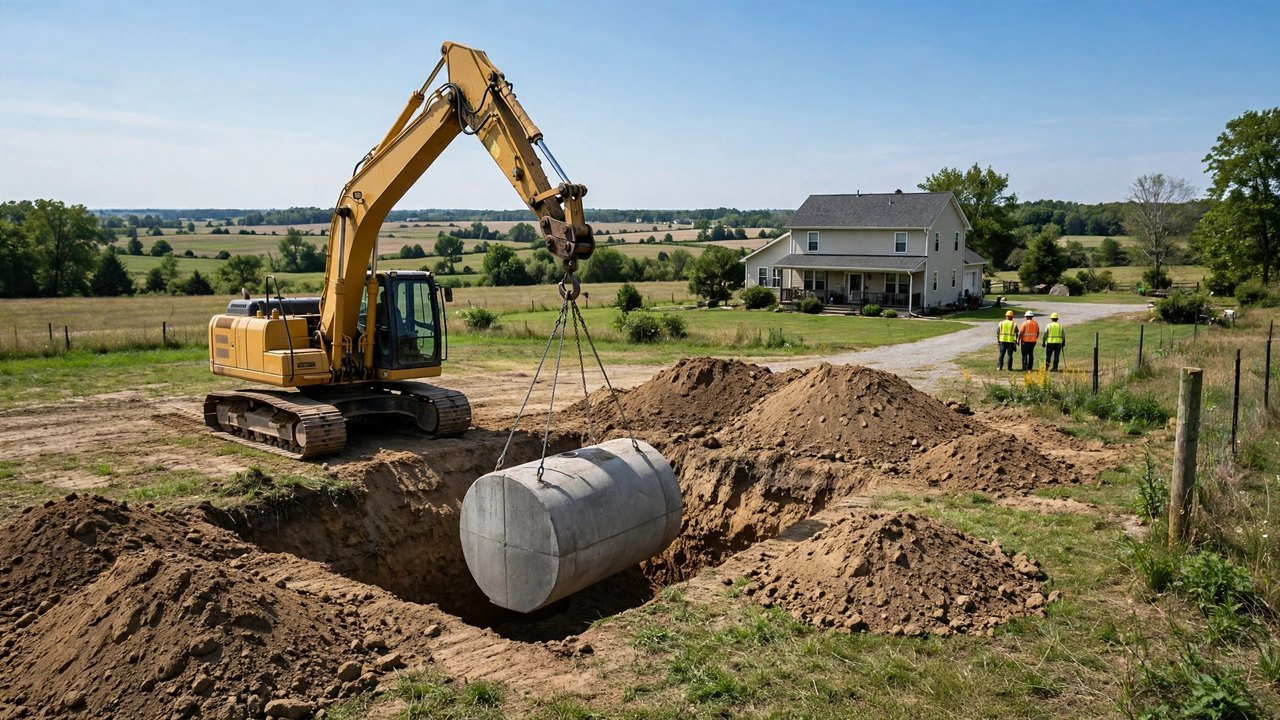
Building a home without city sewer access means you will need your own system, and septic tank installation cost is a major part of that budget. It is not a small expense, but a well-built system can work reliably for decades.
Costs vary widely across the country. Soil, system type, and local rules can double or cut a price. That is why two neighbors can get very different quotes for what looks like the same job.
This guide explains typical 2026 prices, the parts that make up the total, and how to plan with confidence. Prices vary by state and city, so always get 2-3 local quotes before you sign a contract.
Getting this job right matters. A failed system is messy, unhealthy, and far more expensive to fix than to install correctly the first time.
Septic Tank Installation Cost: Quick Cost Summary
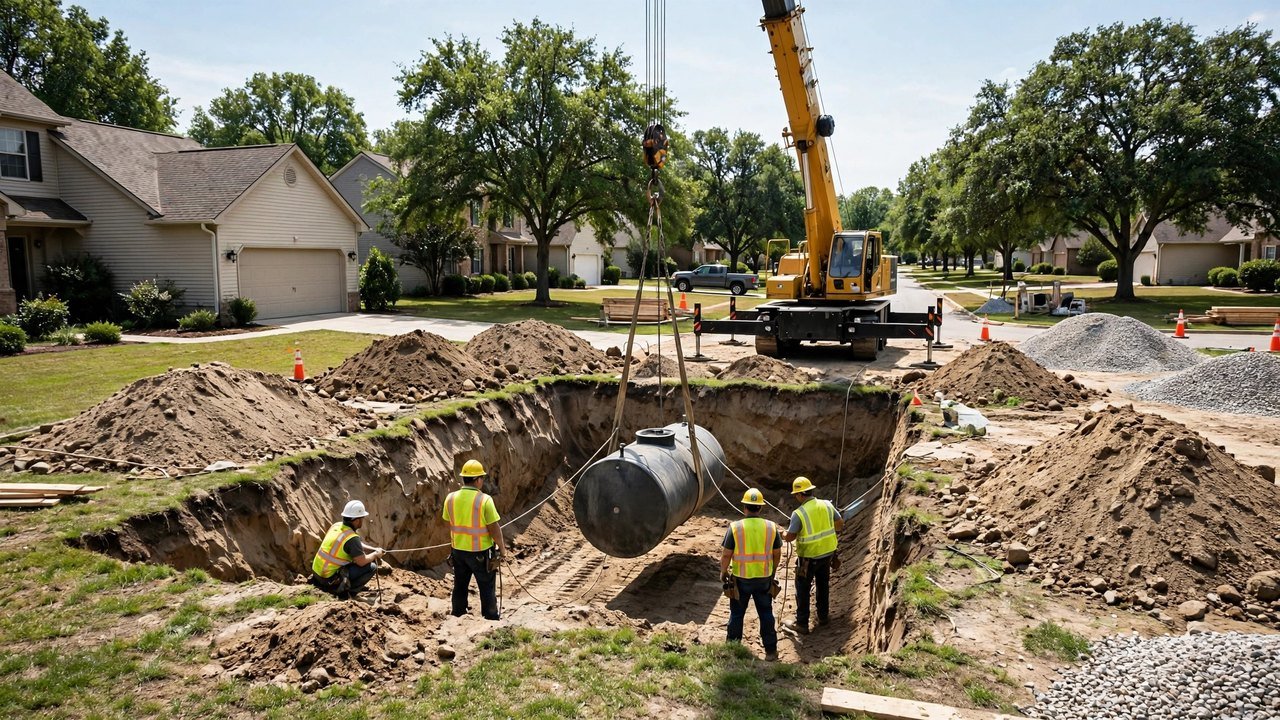
Most complete septic systems cost $4,000 to $15,000 installed. Advanced systems for poor soil cost more. Here is a quick overview.
| System / Item | Average Cost | Low-High Range |
|---|---|---|
| Conventional system (complete) | $7,500 | $4,000 – $12,000 |
| Chamber system | $8,500 | $5,000 – $13,000 |
| Aerobic treatment system | $12,000 | $9,000 – $18,000 |
| Mound system | $15,000 | $10,000 – $20,000+ |
| Tank only (1,000 gallon, concrete) | $1,500 | $1,000 – $2,500 |
| Soil / perc test | $500 | $300 – $800 |
| Permits and design | $1,000 | $500 – $2,000 |
Tank size is based on bedrooms, not bathrooms. A 3-bedroom home usually needs a 1,000-gallon tank. A 5-bedroom home may need 1,500 gallons or more.
These prices include excavation, the tank, the drain field, and basic labor for a standard site. Steep, rocky, or wet sites cost more.
What Affects the Septic Tank Installation Cost?
Soil is the number one factor. A perc test measures how fast water drains through your soil. Good soil allows a simple, cheaper conventional system. Slow soil, clay, or a high water table forces a mound or aerobic system.
System type follows from the soil test. Your installer cannot freely choose the cheapest system if your land will not support it. Local health rules decide what is allowed.
Home size matters too. More bedrooms mean a larger tank and a larger drain field. Both add material and excavation cost.
Site access changes the price. Crews need room for excavators and delivery trucks. Clearing trees, crossing slopes, or working in tight lots adds time and cost.
Local permits and design fees vary. Some counties require an engineered plan and several inspections. Others have a simpler process. Either way, this cost is required and should be in your quote.
Distance also matters. If the tank must sit far from the house due to wells, property lines, or water sources, longer pipe runs add cost. Setback rules are strict for safety.
Septic Tank Installation Cost by Component
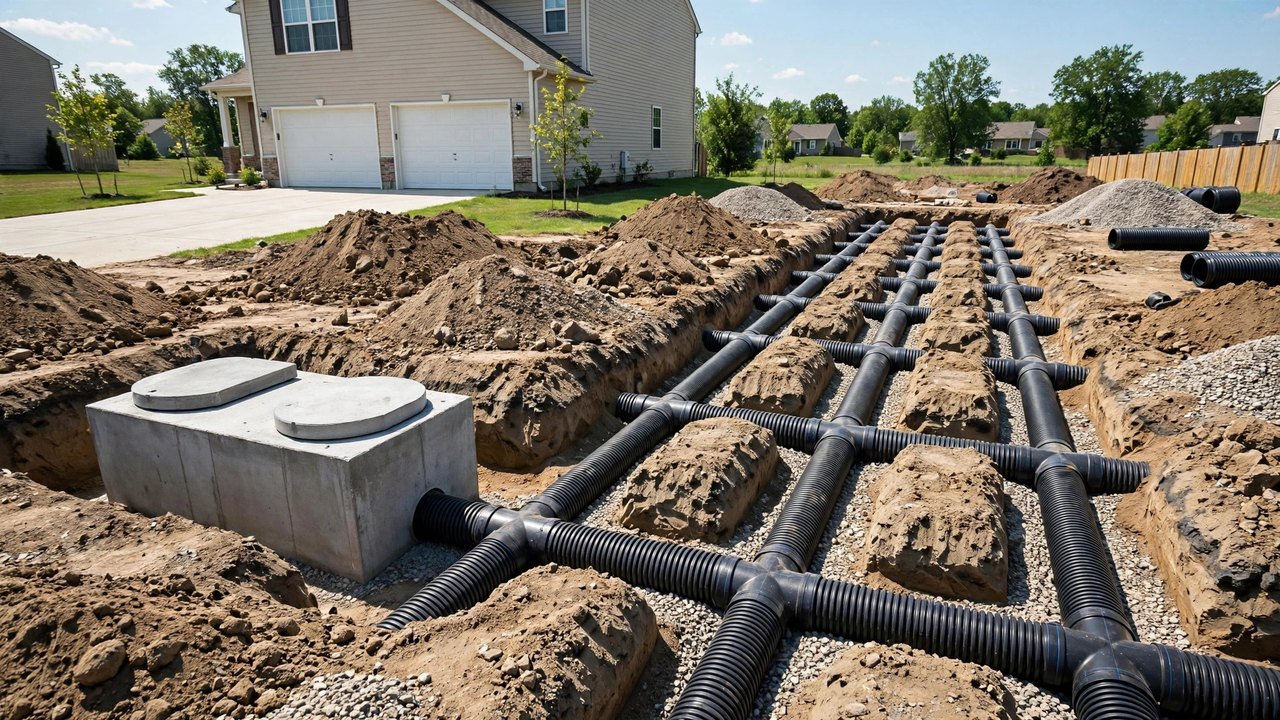
A complete quote has many parts. Seeing them listed helps you spot what a low bid might be missing.
The tank itself costs $1,000 to $2,500 for common sizes. Concrete tanks cost more upfront but last a long time. Plastic and fiberglass tanks are lighter and can be cheaper to place, but prices overlap.
Excavation and site work often cost $1,500 to $3,500. This includes digging for the tank and drain field, placing gravel or chambers, and backfilling when the work passes inspection.
The drain field is a large share of the job. Pipe, gravel, or chamber systems, plus labor, often run $2,000 to $6,000 depending on size and soil. A mound system needs sand and soil hauled in, which raises this part sharply.
Pumps, alarms, and electrical work are needed on many sites. If waste must move uphill to the field, a pump adds $800 to $2,000 plus wiring. Aerobic systems also need aerators and control panels.
Permits, engineering, and the perc test add $800 to $2,800 combined in many areas. Do not skip these steps. An unpermitted system can block a home sale and lead to fines.
Old system removal, if you are replacing one, adds $500 to $2,000 or more. The old tank must be pumped, crushed or removed, and handled by local rules.
Septic Tank Installation Cost: Conventional vs. Advanced Systems Compared
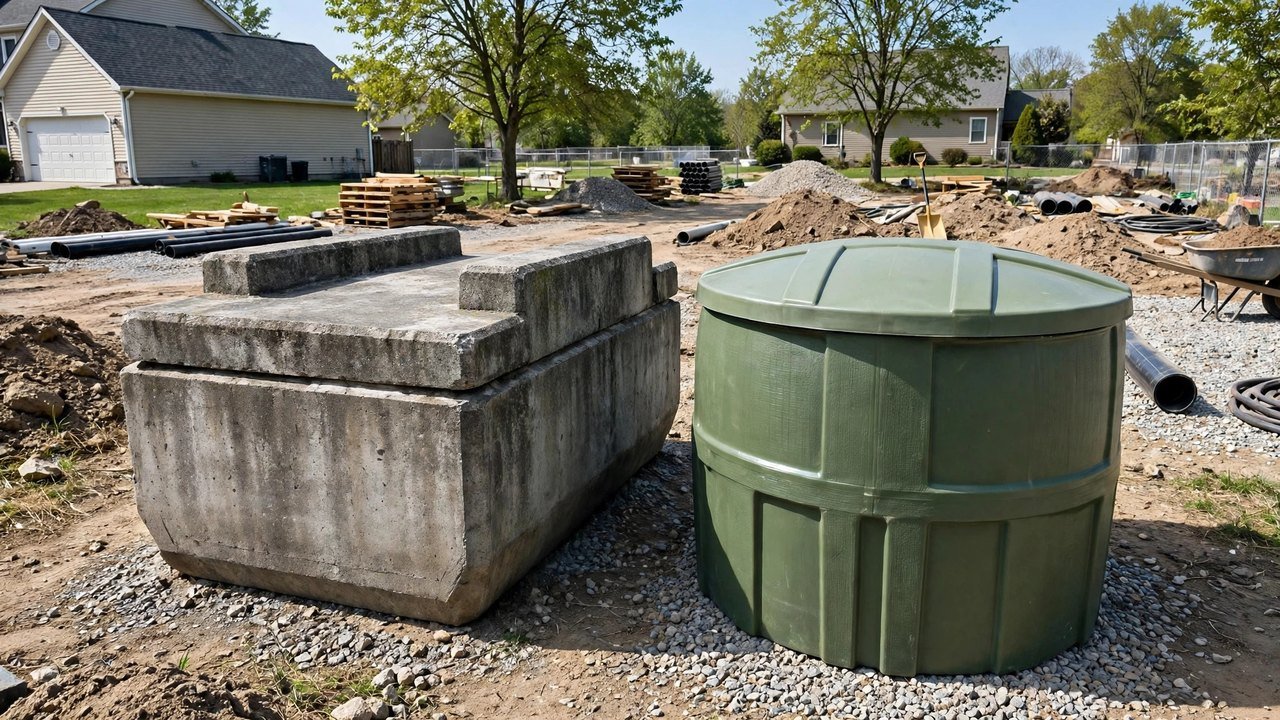
Conventional systems are the simplest and cheapest when soil is good. Waste flows from the tank to a drain field where soil filters it naturally. There are few moving parts, so upkeep is low.
Chamber systems replace gravel with plastic chambers in the drain field. They can work in smaller spaces and install faster. Cost is a bit higher than conventional in many areas, but the gap is often small.
Aerobic systems add oxygen to break down waste more fully. They are used where soil is poor or space is tight. They cost more to buy and need power, regular service, and more frequent checks.
Mound systems build the drain field above ground in a raised bed of sand and soil. They are common where the water table is high or soil drains too slowly. They work well but have the highest cost and a visible raised area in the yard.
Sand filter and other advanced designs exist for special sites. Your soil test and county rules will narrow the real choices quickly. Ask your installer to explain why a system is required, not just recommended.
How to Save Money on Septic Tank Installation Cost
You cannot change your soil, but you can control other parts of the budget.
- Get 2-3 quotes from licensed installers and compare line items, not just totals.
- Do the perc test early so you budget for the right system type from the start.
- Ask if a chamber field lowers labor cost on your site compared with gravel.
- Clear access to the site yourself if it is safe, simple work like brush removal.
- Avoid oversizing. A tank matched to your bedroom count costs less than an extra-large one.
- Keep heavy vehicles and building plans off the drain field area to avoid redesign costs.
- Schedule in drier months if possible, when excavation is easier and crews are less backed up.
- Maintain the finished system. Pump the tank every 3-5 years to avoid costly field failure.
The biggest saving is a long system life. Good design, correct sizing, and regular pumping protect your investment.
Financing Options for Septic System Installation
Because this is essential home infrastructure, several financing paths exist. Many installers offer payment plans or work with home improvement lenders. Ask about terms before work begins.
A home equity loan or line of credit is common for larger systems, since rates are often lower than personal loans. A personal loan can work for smaller jobs if you want a fixed payment and no home collateral.
Some areas offer low-interest loans or grants for replacing failed systems, especially where water quality is at risk. Check with your county health department and state housing agency. Programs change often, so confirm current rules.
USDA rural housing programs may help eligible rural homeowners with water and waste needs. Income and location limits apply. Your installer or local agency can point you to the right office.
If you are building a new home, septic cost is often rolled into the construction loan. Confirm that the full system, permits, and inspections are included in that budget.
Questions to Ask Before You Hire
Septic work is regulated and hard to redo. Ask direct questions before you commit.
Are you licensed and approved by the county to install septic systems? How many systems like mine have you installed in this soil type?
Will you handle the perc test, design, and permits, or do I arrange them? Is everything included in this written quote?
What tank material and size do you recommend, and why? What warranty covers the tank, parts, and labor?
How long will the job take, and how will you protect my yard and driveway? What inspections happen before the system is covered?
What maintenance does this system need, and what does pumping or service cost? Get the answers in writing, along with the final price and payment schedule.
Frequently Asked Questions
How much does septic tank installation cost on average in 2026?
A complete conventional system averages around $7,500, with most jobs between $4,000 and $12,000. Advanced systems for poor soil often cost $10,000 to $20,000 or more.
How long does a septic system last?
A well-built system can last 25-40 years. The tank may last longer than the drain field. Regular pumping and careful water use extend the life a lot.
What size septic tank do I need?
Size is based on bedrooms. Most 3-bedroom homes need 1,000 gallons, and 4-5 bedroom homes need 1,250-1,500 gallons. Local code sets the exact minimum.
Do I need a permit to install a septic system?
Yes, in almost every area. You also need a soil or perc test first. Your installer usually handles permits and inspections as part of the job.
How long does installation take?
Most installs take 2-5 days once permits are ready. Weather, soil, and inspections can extend the timeline. Advanced systems may take a bit longer.
Can I install a septic system myself?
Most counties require a licensed installer, and the work involves heavy excavation and strict rules. DIY installation is rarely allowed and is not recommended.
How often should a septic tank be pumped?
Most tanks need pumping every 3-5 years. Homes with large families or heavy water use may need it sooner. Keep service records for future buyers.
Conclusion
Septic tank installation cost in 2026 is driven mainly by soil, system type, and home size. A standard system often falls between $4,000 and $12,000, while advanced designs cost more. Early soil testing gives you a realistic budget before design work begins.
Do not choose on price alone. The right system for your land, installed by a licensed crew and properly permitted, will save you stress and money for decades. A cheap system in the wrong soil will fail early.
Compare 2-3 detailed quotes, confirm warranties and maintenance needs, and plan for regular pumping. With those steps, your septic tank installation cost becomes a sound, long-term investment in your home.