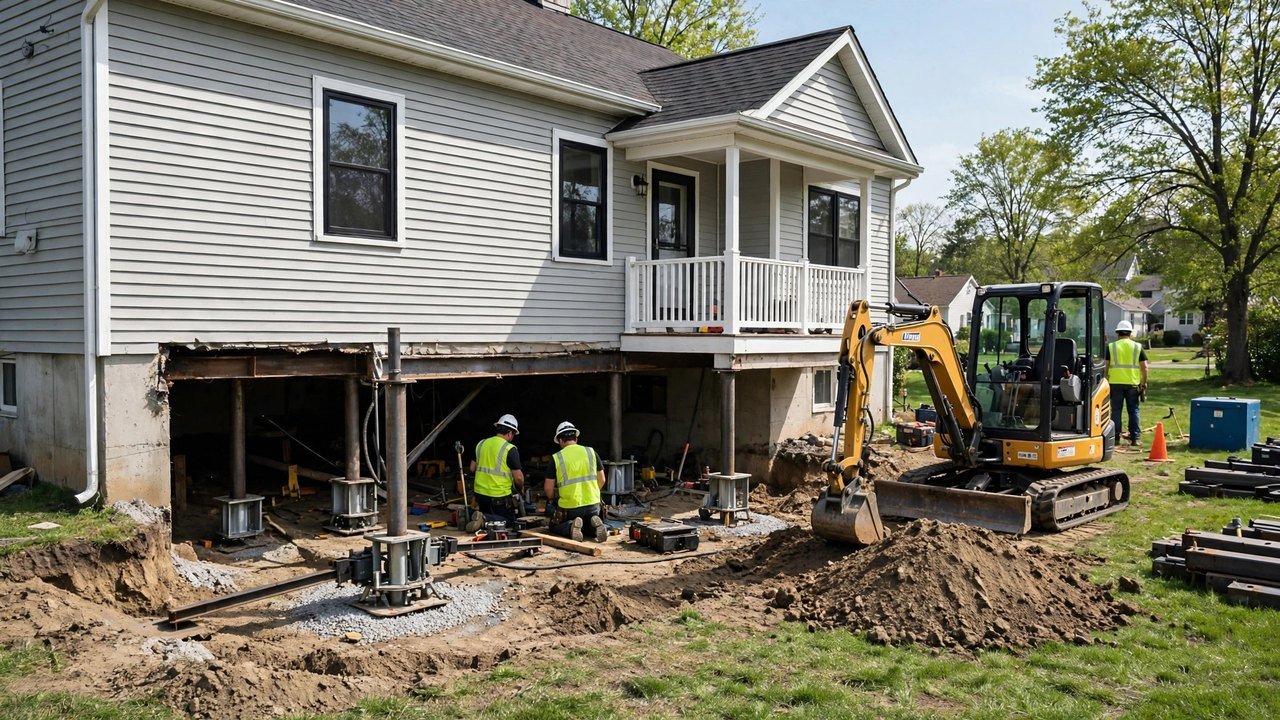
Cracks in walls, doors that stick, and floors that slope are signs your home may need foundation work. The first question most owners ask is about foundation repair cost. In 2026, most homeowners in the USA pay between $2,000 and $15,000 for foundation repair, with a typical job around $5,000 to $8,000. Small crack repairs cost far less. Major lifting with many piers costs far more.
Foundation work protects the whole structure of your house. A problem left alone rarely fixes itself. It usually gets worse as soil moves, water collects, or the home keeps settling in one direction.
This guide covers average prices by repair method, what drives the cost, and how piers, slab work, and basement repairs compare. You will also find ways to save, financing notes, and key questions to ask before you hire a company.
Prices vary by state and city, and soil conditions differ a lot by region, so get 2-3 local quotes from licensed foundation companies before you sign.
Foundation Repair Cost: Quick Summary
A minor repair and a major structural job are very different, so foundation repair cost covers a wide range. Sealing a small crack may cost a few hundred dollars. Installing ten steel piers to lift a corner of a home can cost well over $10,000.
Here is a quick summary of common 2026 prices:
| Repair Type | Average Cost | Low – High Range |
|---|---|---|
| Crack sealing / epoxy injection | $600 | $300 – $1,200 |
| Minor slab repair / mudjacking | $1,800 | $800 – $3,000 |
| Basement wall repair (bowing) | $5,500 | $3,500 – $9,000 |
| Pier installation (per pier) | $1,350 | $1,000 – $2,000 per pier |
| Full pier job (8-12 piers) | $11,000 | $8,000 – $15,000+ |
| Slab foundation repair (whole home) | $7,500 | $4,000 – $14,000 |
| Basement waterproofing + repair combined | $8,000 | $5,000 – $15,000 |
| Foundation replacement (rare, severe) | $35,000 | $25,000 – $50,000+ |
The number of piers is often the biggest line in a structural quote. Each pier is driven or drilled into stable soil and attached to the foundation. A home that needs piers on one side only will cost much less than a home that needs them all around.
What Affects the Foundation Repair Cost
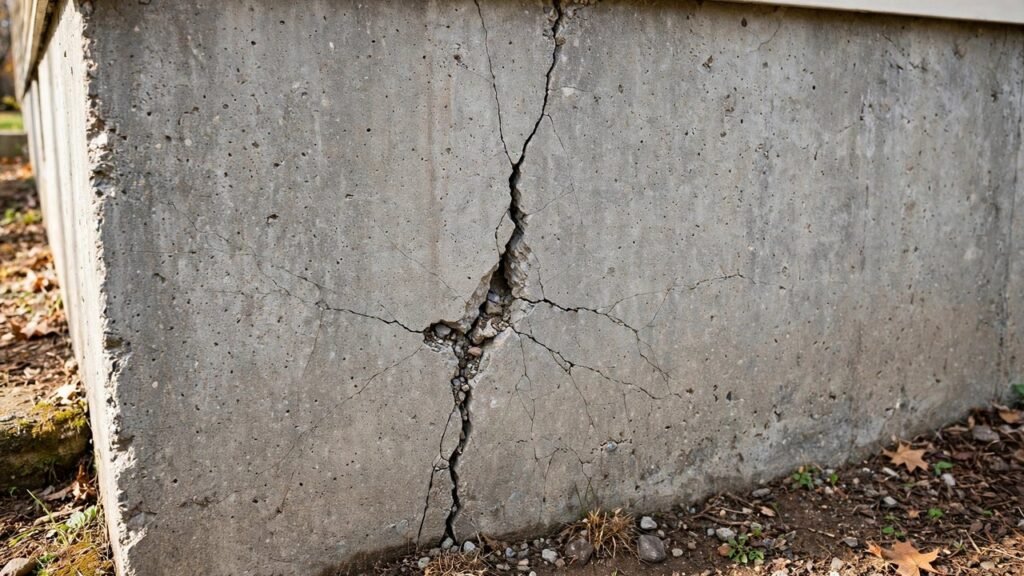
The type and extent of damage is the main factor in foundation repair cost. Hairline cracks from normal settling may need only monitoring or sealing. Wide cracks, stair-step cracks in brick, and gaps around windows point to movement that needs structural repair.
Soil and climate have a huge effect. Expansive clay soils swell when wet and shrink when dry, which moves foundations up and down. Homes in Texas, Oklahoma, and parts of the Midwest see this often. Sandy or rocky soil behaves differently and may need different pier types.
Access to the foundation changes labor cost. If crews can dig outside easily, work goes faster. If they must work inside a finished basement, break through a slab floor, or move landscaping, decks, and concrete, the price rises.
The repair method matters. Mudjacking or foam lifting for a sunken slab is cheaper than deep steel piers. Helical piers, push piers, and concrete piers each have their own price and best use. The right method depends on soil depth and the weight of the home.
Foundation Repair Cost Breakdown by Method
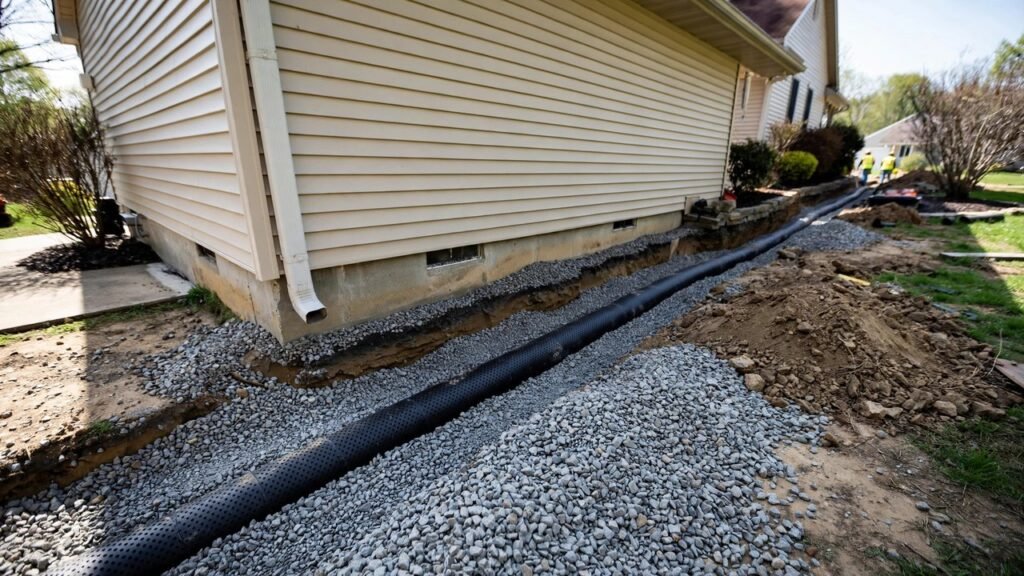
Looking at foundation repair cost by method helps you compare quotes that may suggest very different fixes for the same home.
Piers are the most common structural solution. Steel push piers are driven deep until they reach load-bearing soil, often costing $1,000 to $1,800 each installed. Helical piers are screwed into the ground and often cost $1,200 to $2,000 each. Most homes need 6 to 12 piers, so the pier count drives the total more than any other factor.
Slab repair methods vary. Mudjacking pumps a cement mix under the slab to lift it and costs $800 to $3,000 for a typical area. Polyurethane foam injection is cleaner and faster, often $1,200 to $3,500. If the slab is badly cracked, partial replacement costs much more.
Basement wall repairs address bowing or leaning walls. Carbon fiber straps can stabilize a wall for $350 to $600 per strap. Wall anchors cost $400 to $800 each, plus excavation. A wall that has failed may need to be rebuilt, which can cost $10,000 or more.
Crack repair and sealing is the smallest job. Epoxy or polyurethane injection seals leaking cracks for $300 to $1,200. This stops water but does not fix structural movement, so be sure the cause is minor before choosing it as the only fix.
Piers vs. Slab Lifting vs. Wall Repair: Which Do You Need?
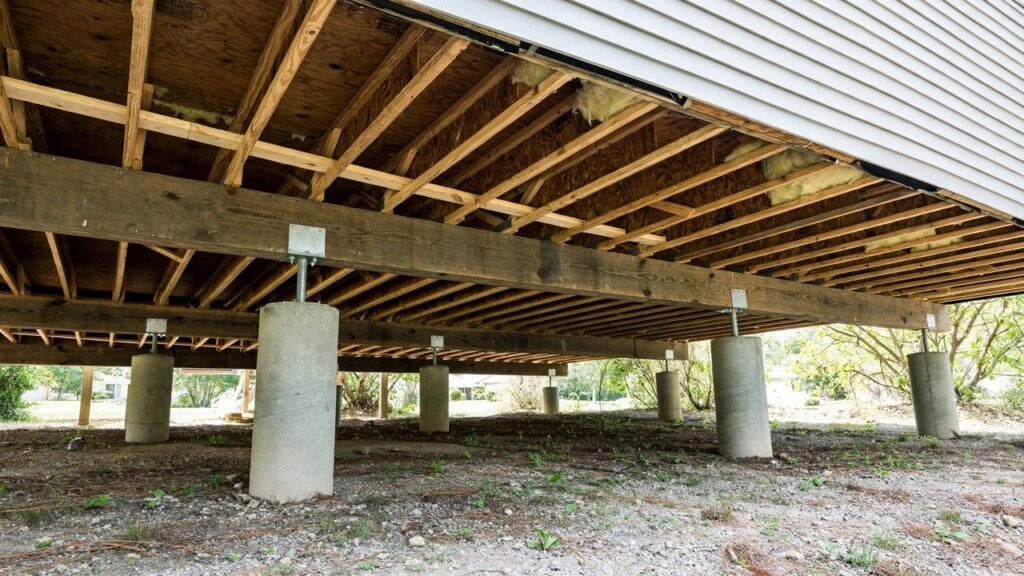
Each method solves a different problem, and choosing the wrong one wastes money. Piers are for homes that are settling downward. They lift and support the foundation on deep, stable soil. If your floors slope and cracks keep growing, piers are often the long-term answer.
Slab lifting is for a concrete slab that has sunk in one area but where the soil issue is shallow. It is faster and cheaper than piers and works well for driveways, patios, and some interior slabs. It does not add deep support, so it is not a fix for serious structural settling.
Wall repair is for basement walls that bow inward from soil pressure. Straps and anchors hold or straighten the wall. This work does not lift the home, and lifting does not fix a bowing wall. Some homes need both types of work.
A good inspection should tell you which problem you have, or if you have more than one. Be cautious of any company that quotes only one method for every home. Ask them to explain, in plain terms, why their method fits your soil and your damage.
How to Save Money on Foundation Repair
Foundation work is costly, but there are smart ways to keep the bill under control without risking your home.
- Get an independent structural engineer report before accepting a large quote.
- Collect 2-3 written quotes and compare pier counts, pier types, and warranties line by line.
- Fix drainage first if an engineer says water is the main cause and damage is still minor.
- Address problems early. A few piers now can cost far less than a full perimeter job later.
- Ask if work can be staged, with the worst side repaired first and the rest monitored.
- Check what the warranty covers and if it transfers to a new owner when you sell.
- Keep gutters clean and soil graded away from the home to slow future movement.
- Avoid cosmetic fixes alone if cracks are wide or growing, as they hide the problem without solving it.
Financing Options for Foundation Repair
Because a major job can pass $10,000, many companies offer financing. Plans may include monthly payments over 5 to 10 years, and some offer short zero-interest periods. Check the interest rate after any promo ends so the total cost is clear.
A home equity loan or line of credit is a common choice for larger structural work, since rates can be lower than other loans. A personal loan may work for smaller jobs under $5,000. Some homeowners also look into home improvement loans backed by federal programs, depending on eligibility.
Questions to Ask Before You Hire a Foundation Company
Ask if the company is licensed and insured for foundation work in your state. Ask how long they have worked in your area, since local soil knowledge matters a great deal in this trade.
Ask what method they recommend and why, how many piers they plan, and how deep they expect them to go. Ask if an engineer has reviewed the plan or if they will provide engineering sign-off when the job is done.
Ask for a written quote with a clear scope, a start and finish timeline, and warranty terms in writing. Ask what they will do if they find extra damage once digging starts, and how that change would be priced and approved by you first.
Frequently Asked Questions
How much does foundation repair cost on average in 2026?
Most homeowners pay $2,000 to $15,000, with a typical structural job around $5,000 to $8,000. Small crack repairs cost under $1,200, while large pier jobs cost more.
How much does one foundation pier cost?
One installed pier usually costs $1,000 to $2,000. The total depends on how many piers your home needs, which is often 6 to 12 for a full repair.
Does homeowners insurance cover foundation repair?
Usually not for settling, soil movement, or wear over time. It may cover damage from a covered event like a burst pipe. Check your policy for the exact terms.
How long does foundation repair take?
Small jobs take one day. A typical pier job takes two to five days. Large jobs with excavation, interior work, or wall rebuilding can take one to two weeks.
Will foundation repair fix my cracks and sticking doors?
It often improves them a lot, but cosmetic cracks may need separate patching after lifting. Contractors usually advise waiting a few weeks before final cosmetic repairs.
Is foundation repair worth it before selling a home?
Often yes. Unfixed foundation problems can scare buyers and lower offers. A repaired foundation with a transferable warranty can make a sale much smoother.
What are the early warning signs of foundation problems?
Look for cracks in walls or brick, doors and windows that stick, gaps at ceilings, sloping floors, and water pooling near the base of the home after rain.
Conclusion
Planning for foundation repair cost starts with knowing your range. Minor sealing can cost a few hundred dollars, most structural jobs fall between $2,000 and $15,000, and severe cases cost more. Pier count, soil, and access explain most of the gap between quotes.
Do not rush into the first plan you are shown. An independent engineer report and a few detailed quotes will tell you if you need piers, slab lifting, wall repair, or simple drainage work. The right fix is the one that matches the real cause of movement in your home.
Act early, fix water problems around the home, and choose a licensed company with a clear written warranty. Done that way, your foundation repair cost becomes money spent protecting the value, safety, and comfort of your whole house.